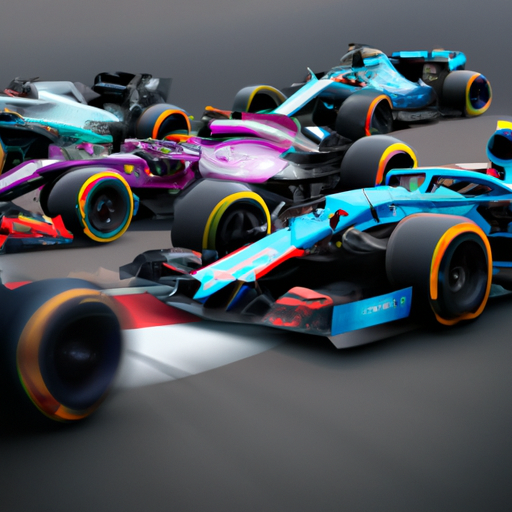
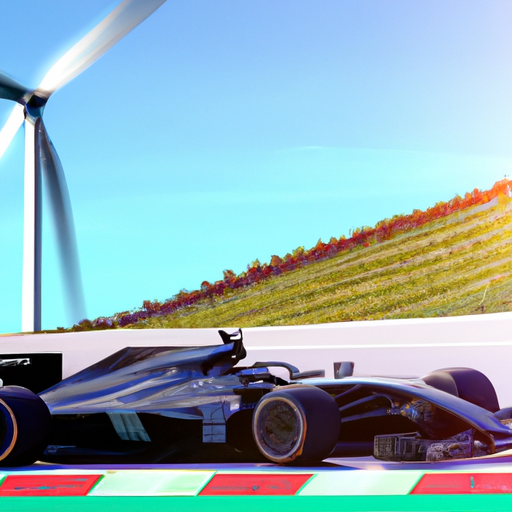
Formula 1 announces ambitious plans to achieve complete carbon neutrality by 2030. Teams are developing revolutionary sustainable technologies that will transform both racing and road cars. The sport's influence is already accelerating the adoption of eco-friendly innovations across the automotive industry.

Formula 1, long criticized for its environmental impact, is undergoing its most significant transformation since its inception. The sport's governing body, the FIA, along with teams and manufacturers, has launched an unprecedented initiative to achieve complete carbon neutrality by 2030, while maintaining the high-performance spectacle that fans expect.
The journey begins with a complete overhaul of the power units that will be introduced in 2026. These new engines will run on 100% sustainable fuels, developed through a combination of carbon capture technology and innovative synthetic fuel production. The fuel represents a breakthrough that could have far-reaching implications beyond motorsport, potentially offering a sustainable solution for existing internal combustion engines worldwide.
Teams are also revolutionizing their approach to car design and manufacturing. Mercedes-AMG F1 has pioneered the use of recycled carbon fiber composites, reducing manufacturing emissions by 35% while maintaining structural integrity. Red Bull Racing has developed new lightweight materials derived from renewable sources, which are already being adapted for use in road cars.
The paddock itself is being transformed. Solar-powered generators have replaced traditional diesel units, and teams are utilizing advanced energy recovery systems to power their operations. Transportation logistics, which account for a significant portion of F1's carbon footprint, are being optimized through artificial intelligence and the use of biofuel-powered vehicles.
Perhaps most significantly, Formula 1's research and development efforts are accelerating the advancement of sustainable technologies that can be applied to everyday vehicles. The sport's intense competition drives rapid innovation, with teams often developing solutions years ahead of their commercial implementation.
Aerodynamic efficiency, crucial for both performance and fuel consumption, has reached new heights. Computational fluid dynamics simulations, running on renewable energy-powered supercomputers, have led to breakthroughs in reducing drag while maintaining downforce. These advances are already being incorporated into road car design, improving fuel efficiency across the automotive industry.
Battery technology has also seen remarkable progress. While F1 cars use hybrid systems, the demands of racing have pushed the boundaries of energy storage and deployment. New battery compositions developed for F1's Energy Recovery Systems are now being adapted for electric vehicles, promising improved performance and faster charging times.
The sport's influence extends to manufacturing processes as well. Teams have developed new recycling methods for composite materials, addressing one of the automotive industry's most challenging environmental issues. These techniques are being adopted by major manufacturers, reducing the environmental impact of vehicle production globally.
Track facilities are evolving to support this green initiative. Circuits are installing renewable energy systems, implementing water recycling programs, and developing sustainable waste management solutions. The iconic Monaco Grand Prix now operates entirely on renewable energy, setting a standard for other venues to follow.
Fan engagement has been crucial to this transformation. Formula 1 has launched educational programs highlighting the connection between racing technology and sustainable transportation solutions. This has helped maintain enthusiasm for the sport while promoting environmental awareness among its global audience.
The financial implications of this green revolution are significant. While initial investments in sustainable technologies are substantial, teams are finding that many innovations actually reduce operating costs in the long term. This economic benefit is helping accelerate the adoption of similar technologies throughout the automotive industry.
Critics initially questioned whether Formula 1 could maintain its excitement while pursuing environmental goals. However, the 2023 season has demonstrated that sustainable technologies can enhance rather than diminish the sport's appeal. Races have become more strategic as teams balance performance with efficiency, adding new dimensions to competition.
As Formula 1 approaches its 2030 target, the sport's transformation is inspiring similar initiatives across other racing series and the broader automotive industry. The technological advances developed under the pressure of competition are proving invaluable in the global effort to reduce carbon emissions while maintaining the performance and excitement that define motorsport.
The success of Formula 1's environmental initiative demonstrates that sustainability and high-performance engineering are not mutually exclusive. As the sport continues to evolve, it is positioning itself not just as a racing series, but as a proving ground for the sustainable technologies that will shape the future of transportation.